Is it simply the cost benefit to media producers that is making them take notice of citizen journalists? It would be cynical to suggest such a thing, but it's a suggestion not without some truth.

Local papers in America are beginning to encourage participatory journalism. One such paper is
Bluffton Today which is one of the most successful local papers in the States. Their whole model is based on merging citizen journalist produced content alongside the content of staff writers. The daily publication was originally a freesheet but began charging 25c and 75c on Sundays.
The paper and website are being heralded as the new model for local papers, at least in America. This is just one example of where traditional journalism is merging with its citizen cousin.


To some it inspires fear, to others it is the very future of journalism. It it of course citizen journalism. For the web 2.0 community and more modern journalists it cannot come quickly enough. But, for the old guard of journalism, and even for many journalism students it is the stuff of nightmares. If anyone can gather the news then what is the journalists role.
Even though citizen journalism is still in its infancy, it is becoming more and more clear that citizen journalism cannot complete a full scale takeover of the status quo. Trained journalists will be required to process the information gathered and verify, insofar as is possible, the information supplied.
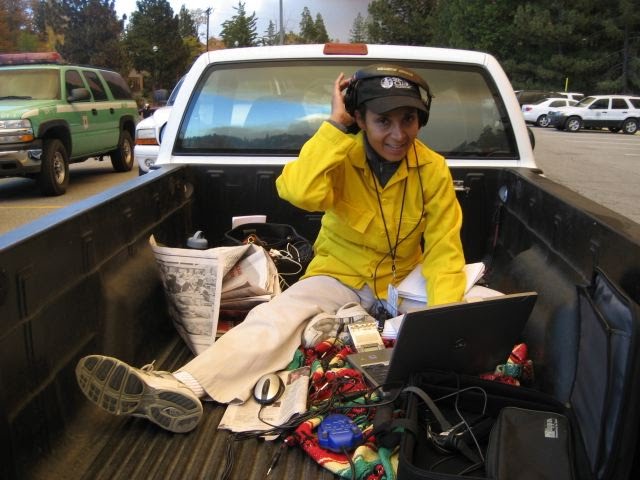
Mark Little spoke some weeks ago in DCU about enabling citizen journalism with reporter packs consisting of basic video recording equipment, a laptop, dongle and some other bits and pieces. He is at the very heart of using social media as a platform for citizen journalism. He spoke of using qualified journalists as gatekeepers, deciding what does and does not get published.
I think that there are two extremes in this arguement and the fundamentalism of either one feeds off the other's. It is very easy to speak in superlatives, but more difficult to rationally assess what the situation is what's likely to happen.
It is my opinion that the transition to journalism fully incorporating citizen journalism will not be as painful as people predict. Furthermore, I think it is incomprehensible that any new publishing platform will wholesale replace its predecessor. It has not yet happened in the history of the media.
Of course, the main difference is the fact that mobile journalists (mojos) are paid by the paper they write for. After that is taken out of the equation there are few differences. A mojo will probably be better equipped, but their output looks very similar to that of a citizen journalist.
Mojos report on everything and anything and record the event for all forms of broadcast and print. One of the main jobs of a mojo on a local paper is to train local people to be citizen journalists who will get paid to contribute to the newspaper.

I think the idea of being a mojo is a good one if it means that you are prepared to record an event in several different ways. However, if it means that you run around like a headless chicken trying desperately to cover everything, but nothing in detail, then it's a very bad idea.
Press Ombudsman John Horgan talked about the legal difficulty of newspapers' online version vetting comments on articles. Addressing the DCU Journalism Society, he said he was aware that there are three full time journalists employed by the guardian to moderate reader comments. He also said that some comment threads just get too hot and are all wiped by the moderator. Talking about the legal repercussions, he said that comments must be very carefully moderated if they are to be included on newspaper websites.
Journalists are used because of their knowledge of media law and what constitutes defamation. This highlights another trend in that journalists are being asked to do something that isn't exactly the traditional definition of journalism.
The news that the BBC is telling its staff to embrace social networking sites in news gathering is the last sign that news sources are fundamentally changing. Peter Horrocks, director of Global news said: "If you don't like it, if you think that level of change or that different way of working isn't right for me, then go and do something else, because it's going to happen. You're not going to be able to stop it."
If the BBC are to use social networking to improve their news output they must not just throw caution to the wind, It must be embraced with a certain level of intelligence and sobriety, if not caution. The old journalistic values must still be held firm by newsrooms. Facts must still be checked and verified, sources must be reliable. Twitter and facebook are reliable, but they also pose dangers with regards to news gathering. It is incredibly easy for romours, hearsay and conjecture.
It is undeniable that social networking will become an invaluable news source for newsrooms the world over, but the profession must not throw caution to the wind when embracing this relatively new phenomenon.